


How Manitoba’s Climate Tests Your Septic System and Pipes — and How We Handle It
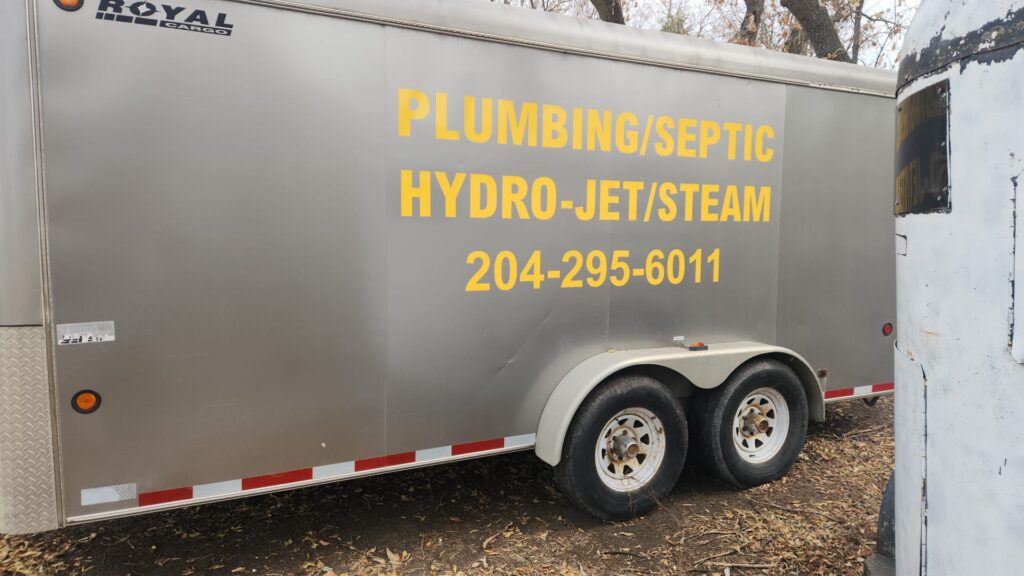
Few places test a plumbing and septic system the way Manitoba does. We swing from deep winter frost to a soggy spring thaw, often within weeks, and both extremes go after your pipes and drain field in different ways. After 20+ years working across Winnipeg and the Interlake, here’s what we see — and how we deal with it. Questions? Call +1 (204) 295-6011, day or night.
Why do pipes and septic lines freeze here when they didn’t before?
Frost in Manitoba can drive several feet into the ground during a cold snap, and it goes deeper wherever snow cover is thin — driveways, plowed paths, and the south side of buildings. A line that ran fine for years can freeze the first winter a section of yard is left bare, or after a stretch of −30 °C with little snow to insulate the ground. Low water flow makes it worse: a cabin or part-time home with little usage gives water time to sit and freeze in the pipe.
What should I do if my line is already frozen?
Don’t pour boiling water down it and hope, and never use an open flame near a line. Frozen sewer and supply lines need controlled heat. We thaw them with a hot-shot machine, a steam machine, and high-pressure jets depending on the situation — and our jet is effective up to 300 feet down the line. The right method clears the ice without cracking the pipe, which is the real risk with DIY thawing in cold weather.
Can a frozen line actually damage my system?
Yes. Water expands as it freezes, so a fully frozen pipe can split — and you won’t know until it thaws and starts leaking. Frozen sewer lines also cause backups into the lowest fixtures in the house. Thawing promptly and correctly limits the damage; waiting, or thawing aggressively, often turns a service call into a repair-and-replace job.
Why does spring cause septic problems too?
Spring is just as hard on septic fields as winter is on pipes. As the frost melts and snow runoff peaks, the water table across much of the Interlake rises sharply — and a drain field can’t disperse effluent into ground that’s already saturated. The result is a field that backs up or surfaces every spring even though it seems fine in summer. Properties in low-lying areas near Lake Winnipeg feel this the most.
Does the freeze–thaw cycle affect the ground itself?
It does. Repeated freezing and thawing heaves and shifts soil, which can stress and misalign buried pipes and distribution lines over time. Combined with our heavy clay soils, that movement contributes to cracks and slow drainage that show up as recurring problems. This is part of why a system here may need attention sooner than the same system would in a milder climate.
How can I prevent winter and spring trouble?
A few habits help: keep snow cover over buried lines rather than clearing it down to bare ground, maintain steady (even minimal) water flow in seldom-used buildings, and don’t overload the field with water during the wet spring weeks. A camera inspection in the fall can catch a vulnerable section before the cold finds it, and an enzyme treatment keeps the tank working efficiently year-round.
Built for Manitoba conditions
We don’t apply mild-climate assumptions to a place with our winters and springs. From emergency line thawing to spring-thaw field repairs, Dnipro Plumbing has the equipment and the local experience to handle it. Serving Winnipeg and the Interlake — call +1 (204) 295-6011 or email [email protected].